By Sam Martin
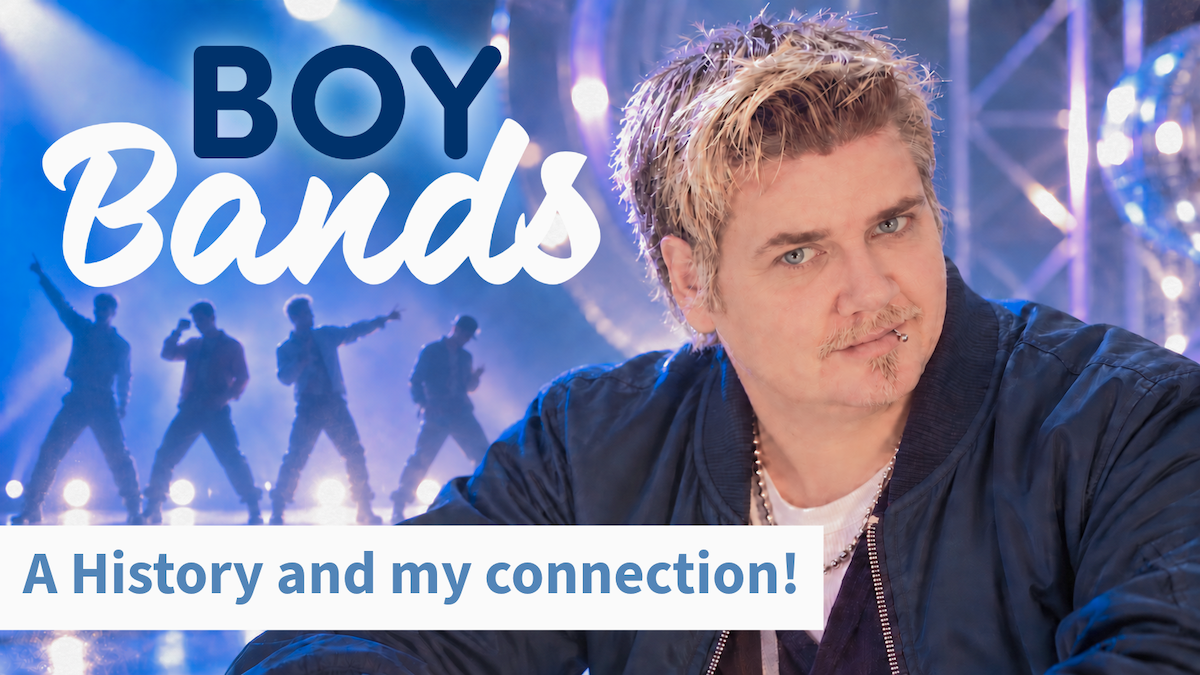
I have a rock and roll heart, but other sounds sneak in. Boy bands have always been my secret love: the love songs, the harmonies, the guys dancing. My boy band years ran from my teens with the introduction of New Edition and New Kids on the Block NKOTB and lasted weiil into my early thirties, perhaps beyond… While I was finding and building my out and loud gender queer identity they helped. My favourite is Backstreet Boys. I saw a little of myself in Nick Carter. We both were gifted with great hair!
That’s my point of entry, not the whole story. Boy bands have a history that stretches through soul, R&B, Latin pop, dance music and the electronic records that took over radio. Their fans and their music deserve more than the old “manufactured pop” dismissal. What made the groups work? How has the sound changd? And what happens to the singers when the fans and the singers grow older?
Before there was a boy band formula
People sometimes start this story with the Beatles. I understand why: four young men, distinct personalities, screaming fans, photographs on bedroom walls. But if every group of young men with fans is a boy band, the phrase stops telling us anything about the music. The Beatles were a working instrumental band and songwriters who changed direction constantly. They belong in the story of fandom and image, but there are other, more direct musical routes to the groups I love.
Listen to the Jackson 5. Motown put an astonishing young Michael Jackson at the front of a family group, surrounded him with his brothers’ voices, choreography and records that could reach across generations. “I Want You Back,” “ABC” and “Blame it on the Boogie” could be bright and immediate without being musically slight. The Rock & Roll Hall of Fame describes their sound as “bubblegum soul,” built from vocal-group music, R&B and Motown’s own tradition. That mixture of youthful energy, harmony, movement and grown-up musical craft would echo through later groups. The Jackson 5 also show why “boy band” can be a limiting label: they played instruments and belonged to a larger Black musical tradition, whether or not later pop histories recognize it. genui{“citation”:{“ref”:”turn7search1″}}
Michael’s path from child lead singer to *Off the Wall*, *Thriller* and *Bad* changed the scale and sound of pop, and he became a model for later stars trying to move beyond a group. Jermaine Jackson also made solo R&B records, including “Let’s Get Serious.” The brothers’ later paths weren’t identical, but the Jackson 5 were a beginning for more than one career, not merely a prelude to Michael’s. genius.
The Osmonds were another family act with enormous young audiences. Menudo, formed in Puerto Rico, developed a different model: the membership changed as the singers aged, keeping the group young. That made the name and the fan experience bigger than any one lineup. These groups did not sound the same, and their audiences did not all live in the same countries or speak the same language. They did show the music business how powerfully a young vocal group could connect through both songs and personality.
Donny Osmond turned his childhood fame into a long solo and stage career; his Las Vegas residency is still scheduled in 2026. Menudo launched two strikingly different careers. Ricky Martin became an international Latin pop star, especially with “Livin’ la Vida Loca.” Robi Draco Rosa developed an adventurous solo career in rock en español and also co-wrote and co-produced that Martin hit. The shifting-lineup group sent artists into musical directions that could hardly fit inside its original formula.
Then there is New Edition. If you want to understand the road to NKOTB, you have to stop here. Maurice Starr worked with New Edition before putting together New Kids on the Block. New Edition’s early “Candy Girl” openly recalled the Jackson 5, but the group did not stay frozen in that sound. As its members grew up, its R&B became more adult, and its members opened other routes: Bobby Brown as a solo star, Bell Biv DeVoe with “Poison,” Ralph Tresvant and Johnny Gill with their own records. New Edition is part of the musical family tree of the 1980s and 1990s, not a footnote before the white groups arrive.
Brown’s “Don’t Be Cruel” made the connection between a teen group’s star and the harder rhythms of late-1980s R&B audible. Ricky Bell, Michael Bivins and Ronnie DeVoe formed Bell Biv DeVoe; “Poison” took that branch toward new jack swing. New Edition have also performed together as adults. They make an unusually clear example of a group becoming several musical careers while the original act retains its own identity.
The groups everyone called boy bands borrowed heavily from Black vocal music. Some were themselves Black vocal groups. Soul and R&B shaped the voices, the phrasing, the slow songs and the dance records. New jack swing would bring programmed beats and hip-hop rhythms into R&B; late-1990s production would make pop choruses bigger and cleaner still. The links are audible when you listen past the marketing.
NKOTB and I was Hooked!
New Kids on the Block were the first boy band I remember as a boy band. I had already heard New Edition and Bobby Brown; NKOTB arrived as this full-blown pop phenomenon with songs, dancing, personalities and a crowd of teeny bopper girls that seemed to know exactly which of the five belonged on their bedroom wall.
One part of the format was giving each member a recognizable image. Fans could pick a favourite, which made the group feel both enormous and oddly personal. Donnie was the one I first saw myself in, but I connected with Jonathan Knight too. As a masc-identified person in Toronto’s queer clubs, I could vicariously through the songs live the life of a young male I thought wasn’t available to me. I didn’t know Jonathan was gay then. He later talked openly about the pressure to hide it during the band’s early years. I think about that now when I remember hiding my own secuality and gender identity. How I felt like such a liar.
The records still have their own pull. “Please Don’t Go Girl” asks for the most direct emotional response possible. “You Got It (The Right Stuff)” has that snap you can hear before anyone starts singing. “Hangin’ Tough” puts a little defiance around the group. I love “Step by Step”; it knows exactly how to lodge a chorus in your head. Their 1988 album *Hangin’ Tough* made the model enormous: love songs and dance tracks, five recognizable guys, videos and an audience that didn’t need anyone else’s permission to love them.
“Games” is one of my favourites. I love how it meshes hip-hop with the group’s pop sound. Donnie’s rap gives it a harder edge, and that energy still hits me.
NKOTB didn’t invent that mix. Starr’s work with New Edition is an essential piece of their story. The New Kids carried it into mainstream pop on a scale later managers and labels watched closely. But an image only travels so far without songs people want to hear again.
The videos and merchandise gave NKOTB reach beyond radio. That visibility attracted mockery too, much of it aimed at the age and gender of their fans. Yet *Hangin’ Tough* supplied a practical template for later groups: contrasting singles, identifiable members, coordinated performance and a fan culture that could keep growing between album releases. The hooks have lasted better than some of the outfits.
The five New Kids reunited in 2008, released more music, and kept playing to the fans who grew up with them. Their 2024 album *Still Kids* and their scheduled 2026 Las Vegas shows put them in a rare position: they can perform the young versions of themselves while standing on stage as the people they actually are now. I find that more interesting than pretending the years didn’t happen.
The R&B voices between the waves
Before getting to my favourite, I have to make room for Boyz II Men. People don’t always put them in the same boy band conversation, perhaps because their R&B identity and vocal ability are so central to their reputation. That is precisely why they belong in the musical history. “End of the Road,” “I’ll Make Love to You” and “On Bended Knee” showed how much a group could do with the tension between individual leads and voices coming together. Their records moved through doo-wop, new jack swing and hip-hop-era R&B; the harmonies could be tender without being small.
They also help explain the next shift. The biggest late-1990s groups would combine the emotional pull of R&B male vocal groups with the scale of teen pop. Take That, Boyzone and Westlife took other versions of the format through Britain and Ireland. None of these acts was making music in isolation. Radio, music television, producers and fans were passing ideas between scenes and countries.
Take That also gave Robbie Williams a start before his very different solo career, while Gary Barlow continued as a songwriter and performer and the group eventually reunited. Boyz II Men, meanwhile, continued after original bass singer Michael McCary’s departure as Nathan Morris, Shawn Stockman and Wanya Morris. These outcomes say more about the range of paths available after a boy band than a simple “who made it?” tally.
The production credits show that exchange as clearly as the charts do. Boyz II Men worked with Babyface on “I’ll Make Love to You” and with Jimmy Jam and Terry Lewis on “On Bended Knee.” Jam and Lewis had worked with New Edition too. A producer’s sound could move between artists, while each group’s arrangement and voices changed its effect. By the time Max Martin’s melodies were powering Backstreet Boys and *NSYNC, the route between R&B ballad, dance beat and radio pop was well travelled. Boy bands did not create every one of those sounds. They carried them to audiences who might first encounter a style through a love song or a video and then follow it somewhere else.
And around the big names came a flurry of groups that many of us remember by one song: Canadian group soulDecision’s “Faded,” LFO’s “Summer Girls,” BBMak’s “Back Here,” O-Town’s “All or Nothing.” That “I’m kind of faded, but I feel all right” hook still comes right back. soulDecision also had “Ooh, It’s Kinda Crazy.” Nick Lachey’s 98 Degrees had several hits, including “The Hardest Thing” and “I Do (Cherish You),” but their first run felt brief beside Backstreet Boys’ continuing career. Nick moved into solo music with “What’s Left of Me” and television, including hosting *Love Is Blind*. The group eventually returned, releasing *Full Circle* in 2025. They weren’t all literally one-hit wonders, but together those songs made it feel as though another group arrived every time you turned on the radio.
Backstreet Boys: my favourite
Backstreet Boys are the ones I return to most. Yes, the looks were part of it. So were the love songs. But if you put the photographs away and just play the records, the five voices still make the case. Brian, AJ, Nick, Howie and Kevin sound like a group. Each can give a song a different colour; together they make the chorus bigger than any one of them.
“Quit Playing Games (With My Heart)” and “I’ll Never Break Your Heart” sit closer to the R&B-ballad side of the story. “As Long As You Love Me” picks up a quicker pop pulse. “Everybody (Backstreet’s Back)” comes at you with costumes, choreography and a wink; it wants a room full of people to join in. Their early sound brought the vocal-group tradition into the very polished pop world of the 1990s. The Recording Academy draws a line between Boyz II Men’s R&B success, NKOTB’s teen appeal and what Backstreet Boys brought together. I hear that history, but I also hear five particular voices that made it theirs.
Then there is “I Want It That Way.” It is one of those records where people can debate the words forever and still sing every note. Written by Max Martin and Andreas Carlsson, it became the centrepiece of a pop sound that would travel far beyond this group. Martin and the Swedish production teams around him helped build melodies and choruses that hit with enormous clarity on the radio. The Backstreet Boys gave those songs human voices. The space between a perfectly constructed melody and the feeling you hear in a singer’s voice is where the record lives.
My favourites go beyond that one hit: “Incomplete” from *Never Gone*, “Inconsolable” from *Unbreakable*, and “Chances” from *DNA*. Those later songs are part of why I don’t leave Backstreet Boys behind in 1999. I still want to hear what they did as the group grew older.
This is where the genre’s love songs do their quietest work. A record made for millions becomes connected to one listener’s relationships. Years later, a chorus can bring back someone they dated or loved. I hear that in Backstreet Boys, which is one reason they remain my favourite. The feeling is personal; the musical skill that makes room for it is there on the record for anyone to hear.
The group did something many acts from a huge pop wave don’t manage: they kept being a group. Members pursued their own work and lived through the changes that come with decades in public, but the five still perform together. Their *Into the Millennium* show at Sphere in Las Vegas extended through 2026, with further dates announced into early 2027. That isn’t a museum display of the 1990s. It is five men doing the work of singing those songs now, for people who have lived a lot since first hearing them.
*NSYNC and the moment pop started moving faster
*NSYNC arrived into a world where the boy band could already fill an arena. They had to stand out inside a crowded sound, and they did. “Tearin’ Up My Heart” has the early rush; “Bye Bye Bye” arrives with that unmistakable movement and chorus; “It’s Gonna Be Me” clips the phrasing into something almost rhythmic. By “Pop,” the group sounds fully aware that people are arguing about whether music like theirs counts. Rather than plead for approval, the song pushes harder.
The rivalry with Backstreet Boys made for easy headlines. As a listener, I hear two different approaches. Backstreet Boys give me the love song that opens up and lets the voices sit in it. *NSYNC often sound like they want to turn a corner halfway through the track and show you another move. Both used the great late-1990s pop-writing machine, including Max Martin. Neither can be reduced to it.
Their 2000 album *No Strings Attached* sold about 2.4 million copies in its first US week. That’s a picture of scale, but the more interesting story is the shift in the records. By *Celebrity*, “Pop” and “Gone” pointed toward a more individual sound, particularly for Justin Timberlake. On “Gone,” he takes the lead throughout; that tells you something about the direction things were moving. It doesn’t erase JC Chasez’s voice or the contributions of Lance Bass, Joey Fatone and Chris Kirkpatrick to the group that got him there.
Lance was the other blond guy I connected with—the one who trained for a trip to space but never flew. I didn’t know he was gay at the time either. It’s strange and interesting to look back at Jonathan and Lance now: I connected with both while I was working out who I was, without knowing that part of either man’s life.
The group went on hiatus in 2002. The members found work in music, theatre, film, television and other corners of entertainment. JC released a solo album; Justin’s solo career became a much bigger public story. They recorded “Better Place” for *Trolls Band Together* in 2023, their first new song together in over twenty years, and reunited again on “Paradise” on Justin’s 2024 album. Hearing those voices back together reminds me why the group mattered in the first place.
Justin: why the solo career lasted
Justin Timberlake had the most durable solo pop career to emerge from these three groups. That fact can lead to lazy conclusions. He didn’t succeed because he alone had talent, or because boy band music was something he had to escape. *NSYNC gave him a platform, a huge audience and years of experience singing and performing. He then had to make a record people would choose for a different reason.
*Justified* did that in 2002. With collaborators including the Neptunes and Timbaland, he moved into a more adult R&B and pop sound. “Like I Love You,” “Cry Me a River” and “Rock Your Body” belonged to a new phase without asking listeners to forget his voice. That balance mattered: he was familiar enough to bring an audience with him and different enough to earn a place on radio as a solo act. It also mattered enormously who made those sounds with him. Pharrell Williams, Chad Hugo and Timbaland weren’t background names. Their ideas shaped what the records could be.
He made another sharp turn with *FutureSex/LoveSounds* in 2006. “SexyBack” didn’t sound like a boy band member offering a safe update of his old hits. The electronic textures and rhythms pushed at what pop radio was doing. *The 20/20 Experience* in 2013 and a long run through television, film and later music kept him present between pop cycles. “Can’t Stop the Feeling!” reached listeners far removed from *NSYNC’s first audience. That is how a career lasts: enough continuity to be recognizable, enough change to have another reason to listen.
Timing helped. Producers were crossing freely between R&B, hip-hop and pop; Justin had performance skills, collaborators, an audience and an industry willing to put him at the centre of the story. His rise wasn’t an individual act of will.
That is what I mean when I wonder why he survived the hardest part of leaving a boy band. He found an identity outside the group that listeners accepted over more than one album. It doesn’t mean his bandmates failed. JC’s path, for example, shows that a remarkable singer can make different choices and receive a very different level of industry support. The public can be unfair in deciding whose second act gets called a success.
Justin’s 2024 record *Everything I Thought It Was* included “Paradise” with *NSYNC. It was a reminder that the group and solo histories can occupy the same life. Whatever each of us thinks of him now, the records tell a clear story of a performer who kept finding new producers, new sounds and new audiences.
The bands grew older. So did I.
The format kept changing after *NSYNC. One Direction brought it into the social-media years without the synchronized dance routines; Harry Styles later made a distinct solo career. BTS and other K-pop groups took choreography, production and global fan communities in new directions. Those bands belong in the history, but I grew up too. For the most part, I left the genre there and stuck with the groups that were part of my own life. Those are the records I still go back to.
Loving boy bands shouldn’t require an embarrassed confession. We can laugh at the hair and examine the marketing without dismissing the harmonies, the changes in production or the influence on later pop. We can also pay attention to fans, who gave these songs meanings far beyond anything printed on an album sleeve.
I now hear more clearly the roots beneath all three groups: the Jackson 5, New Edition, Boyz II Men, the writers and producers, R&B that quick histories too often skip. I hear the years in the songs as well. Some remind me of women I’ve loved. Others just make me turn the volume up.
That’s the thing about a playlist. It can put a song made for millions next to the one memory that belongs only to you. I’ll be sharing the tracks behind this piece on Patreon; you can also find me on YouTube at **@thesamimartin**. Play the songs you thought you’d outgrown. You may hear somebody you used to be, and maybe somebody you’re still becoming.